

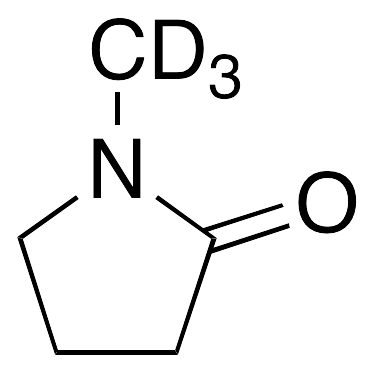
1-Methyl-2-pyrrolidinone-d3
Share product
Product Overview
Codice prodotto
TRC-M326122
Numero CAS
Formato del prodotto
Neat
Formula molecolare
C5H6D3NO
Peso molecolare
102.15
Categorie di prodotto
Pharmaceutical and Veterinary Residue Reference Materials , Stable isotopes, TRC, Pharmaceutical and veterinary compounds and metabolites Reference Materials , Pharmaceutical, Veterinary Compound & Metabolite Reference Materials , Food contact materials
CAS non marcato
Documentazione
Cerchi un altro lotto?
Per visualizzare immediatamente tutti i certificati di analisi, accedi al tuo account
oppure
Link per il download tramite e-mail
{{ errors[0] }}
{{ errors[0] }}
Per informazioni sulle nostre attività di trattamento dei dati, visita la nostra Informativa sulla privacy.
Inserisci il tuo indirizzo e-mail e ti invieremo il CoA pertinente per i lotti:
{{ coaPopupData.packSize.coaSelectedLotNumbers }}
{{ errors[0] }}
Invieremo il CoA al tuo indirizzo e-mail {{ coaEmailPopupData.userEmail }}
Your request has been sent to our sales team to process.
Trova una SDS per la tua regione
{{ errors[0] }}
{{ errors[0] }}
Per informazioni sulle nostre attività di trattamento dei dati, visita la nostra Informativa sulla privacy.
Your request has been sent to our sales team to process.
Informazioni sul prodotto
Chemical Data
Nome dell'analita
1-Methyl-2-pyrrolidinone-d3
Numero CAS
933-86-8
Formula molecolare
C5H6D3NO
Peso molecolare
102.15
SMILES
O=C1CCCN1C([2H])([2H])[2H]
InChI
InChI=1S/C5H9NO/c1-6-4-2-3-5(6)7/h2-4H2,1H3/i1D3
CAS non marcato
872-50-4
Tipologia SIL
Deuterium
Dati del prodotto
Temperatura di conservazione
+4°C
Temperatura di spedizione
Room Temperature
Paese di origine
CANADA
Tipologia prodotto
Stable Isotope Labelled; Contaminant
Formato del prodotto
Neat
Product Description
Labelled 1-Methyl-2-pyrrolidinone (M326120). It is a versatile industrial solvent. NMP is currently approved for use only in veterinary pharmaceuticals. The determination of the disposition and metabolism of NMP in the rat will contribute toward understanding the toxicology of this exogenous chemical which man may likely be exposed to in increasing amounts.
References: Southwell, D., et al.: J. Pharm. Pharmacol., 33, 3 (1981), Barry, W., et al.: J. Invest. Dermatol., 82, 49 (1984),
{{title}}
Effettua il login o registrati per aggiungere ai tuoi preferiti
Oppure continua a navigare senza accedere ai preferiti o ai prezzi
Effettua l'accesso per visualizzare i prezzi e aggiungere al carrello
Oppure continua a sfogliare per vedere i round disponibili senza le informazioni sui prezzi
-
Codice prodotto:
{{ isMultiplePacksize(product) ? getSourcePart(product) : product.code }} {{ isMultiplePacksize(product) ? getSourcePart(product) : product.code }}
Controlled product
Login to view full product details
{{ addToCartData.mixPtRmWarning }}
Desideri procedere?
{{ errors[0] }}
{{ errors[0] }}
{{ errors[0] }}
{{ errors[0] }}
{{ errors[0] }}
{{ errors[0] }}
{{ errors[0] }}
{{ errors[0] }}
{{ errors[0] }}
{{ errors[0] }}
{{ errors[0] }}
{{ errors[0] }}
{{ errors[0] }}
{{ errors[0] }}
{{ errors[0] }}
{{ errors[0] }}
{{ errors[0] }}
{{ errors[0] }}
{{ errors[0] }}
{{ errors[0] }}
{{ errors[0] }}
{{ errors[0] }}